
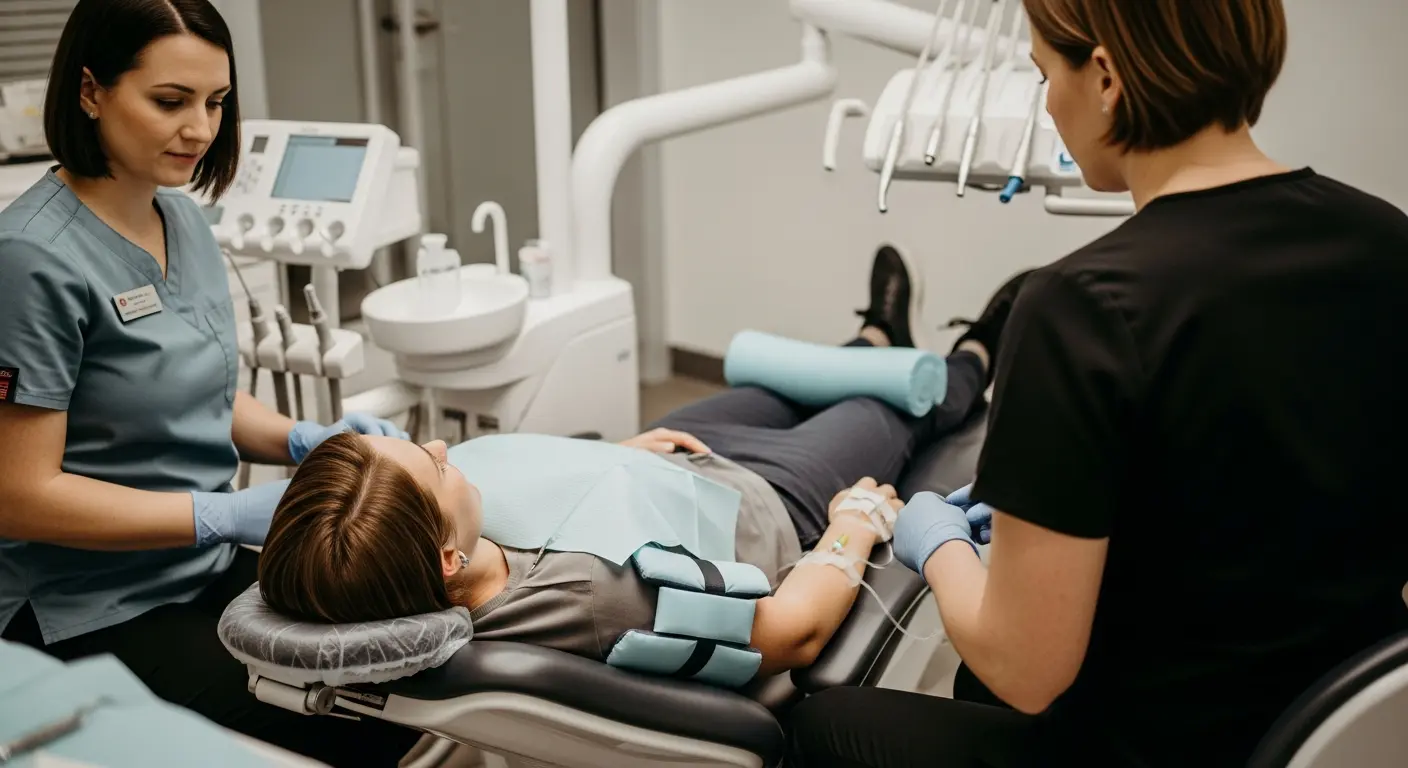
In dental procedures involving oral or IV sedation, patients are often in a relaxed state and unable to adjust their position, increasing the risk of peripheral nerve injuries from compression or stretch. Based on established guidelines, here are the top five considerations to prevent such injuries:
- Preoperative Assessment for Risk Factors: Evaluate patients for conditions that heighten vulnerability to nerve injury, such as diabetes, obesity, hypertension, preexisting neuropathies, or extremes of body weight. This helps tailor positioning and monitoring strategies. For instance, patients with diabetes may have reduced nerve resilience, necessitating extra caution during sedation.
- Appropriate Patient Positioning: Position the patient to avoid excessive stretch or compression on nerves, such as limiting arm abduction to 90° in supine positions, keeping forearms neutral, and avoiding extreme hip or knee flexion. In a dental chair, ensure the head, neck, and limbs are in neutral alignment to prevent brachial plexus or sciatic nerve strain during prolonged procedures.
- Use of Protective Padding: Apply padding to pressure points like elbows (for ulnar nerve), fibular heads (for peroneal nerve), and other bony prominences to distribute weight and reduce direct pressure. In dental sedation, where patients may remain semi-supine for extended periods, padded armboards and supports are essential.
- Periodic Intraoperative Assessments: Regularly check and adjust the patient’s position during the procedure to maintain desired alignment and detect any shifts that could lead to nerve compression. Under sedation, continuous monitoring of vital signs and consciousness levels can indirectly support this by alerting to potential issues.
- Avoidance of Excessive Pressure and Equipment Risks: Ensure no direct contact with hard surfaces, avoid tight padding or restraints, and consider procedural duration to minimize immobility. In IV sedation, also select venipuncture sites carefully to prevent nerve damage from needle insertion, such as avoiding areas near sensitive nerves like the cephalic vein at the wrist.