
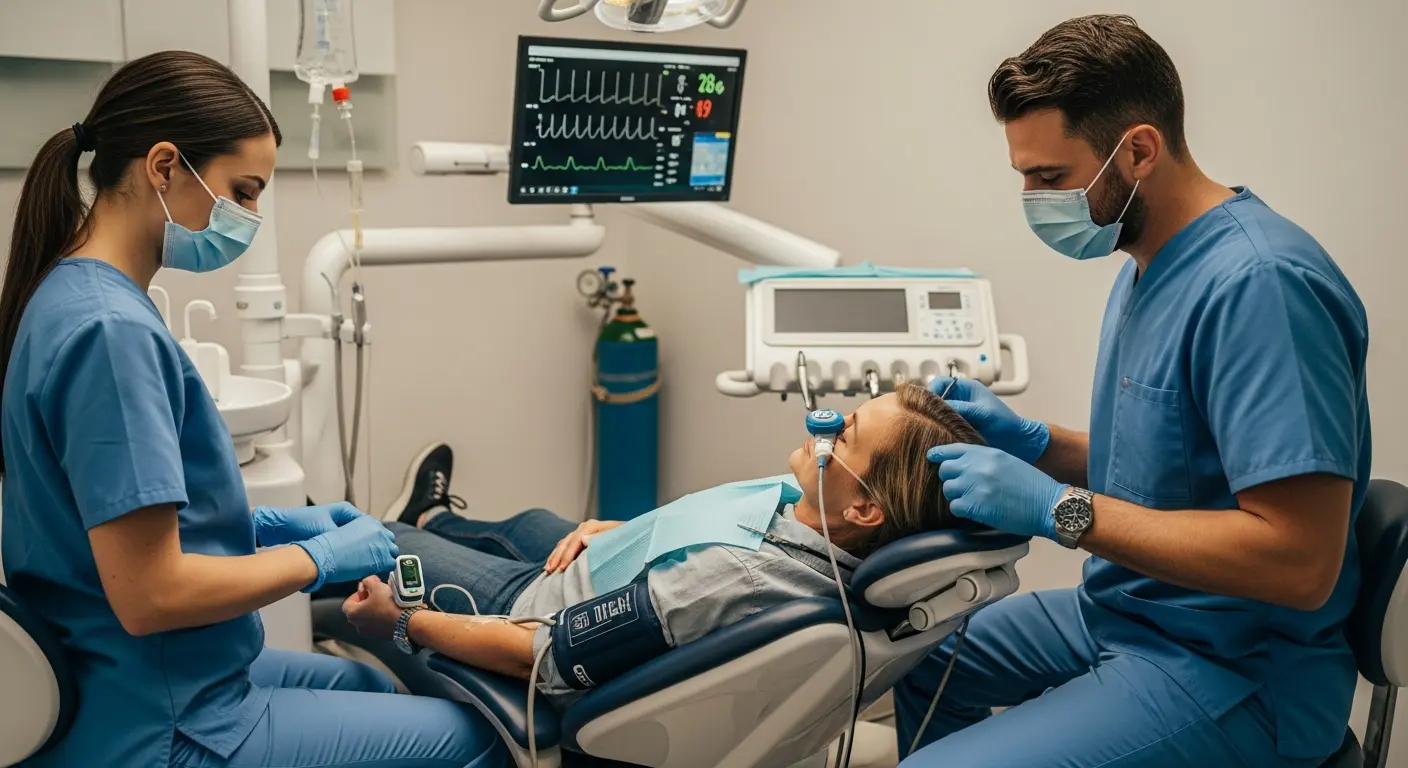
Airway Management Challenges: Obese patients with BMI >35 often have altered upper airway anatomy, leading to difficulties in mask ventilation, intubation, and increased risk of obstruction during sedation. Proper assessment (e.g., Mallampati score, neck circumference) and readiness for advanced airway techniques are crucial for dental procedures under oral or IV sedation.
Obstructive Sleep Apnea (OSA) Screening: A high prevalence of OSA in this population increases risks of respiratory depression and desaturation. Use tools like the STOP-BANG questionnaire preoperatively to identify and mitigate risks, potentially opting for anesthesia consultation or avoiding deep sedation levels.
Altered Pharmacokinetics and Dosing: Sedative drugs like propofol or opioids may have unpredictable distribution and require dosing based on ideal or lean body weight rather than total body weight to avoid overdose and prolonged effects in obese patients.
Respiratory Complications and Pre-Oxygenation: Reduced functional residual capacity leads to rapid oxygen desaturation. Employ ramped positioning and pre-oxygenation with PEEP to enhance oxygenation reserve during IV or oral sedation.
Comorbidities and Monitoring: Associated conditions like hypertension, diabetes, and cardiovascular issues heighten perioperative risks. Continuous monitoring of oxygenation, ventilation (e.g., capnography), and hemodynamics is essential, with caution in postoperative opioid use to prevent respiratory depression.